The purpose of this essay is to find similarities between the 2 dream theories and the movie inception; with the dream theories being freud's theory and the activation synthesis theory, freud's theory is that dreaming is meaningful, unlike the activation synthesis theory.
The sleeping brain the activation-synthesis model suggests that dreams are caused by the physiological processes of the brain.
Allan hobson and robert mccarley of harvard university presented a neurophysiological model of the dream process that seriously challenged freud's theory on virtually every point.
Allan hobson and robert mccarley first proposed their theory in 1977, suggesting that dreaming results from the brain's attempt to make sense of neural activity that takes place during sleep.
It devotes unprecedented coverage to the impact of.
Activation synthesis theory ap psychology
This picture shows Activation synthesis theory ap psychology.
Confuses destroys deceives assists during rem nap, our muscles ar paralyzed.
What is the activation-synthesis theory?
For anyone who has been exasperated by the convolutions of analyst or other schools of dream rendition, the activation-synthesis possibility has a definite iconoclastic appeal because it dismisses dreams as just indeed much nonsense.
Getting the recommended amount of sleep allows our body to affair properly the side by side day.
Research paper data title random form textures theory and synthesis.
The query of why individual dreams have perplexed researchers and investigations for 1000 years, merely it is alone generally current fashionable history that researchers have capable to take a approximate look at peculiar what takes home in the consistency and central excited system dreaming.
Activation-synthesis theory quizlet
This picture shows Activation-synthesis theory quizlet.
The first theory is called the activation-synthesis theory.
The differences fashionable neuronal activity of the brainstem during waking and rapid eye movement sleep were discovered, and the conjecture proposes that dreams result from mentality activation.
Another theory, known as the activation-synthesis possibility, proposes that neurons in the mentality randomly activate during rem sleep.
Hobson argued and quoted that random electrical signals from the brain stem force the pallium to make the best of A bad job fashionable producing even partly coherent dream imaging from the comparatively noisy.
This theory says that the wi produces random physical phenomenon energy during RE sleep.
The activation-synthesis hypothesis of dreams offers a neurobiological account of dream developing.
Activation-synthesis theory criticism
This picture illustrates Activation-synthesis theory criticism.
The activation-synthesis theory explains us that the messages of dreams are not A meaning.
Dreams are just the by-product of bursts of action in the brain.
Example of a parasomnia is somnambulism, popularly referred to equally sleep walking, equally well as nighttime terrors.
One is the activation-synthesis theory, which holds that dreams are interpretations aside our forebrain of essentially random activenes from the skeletal structure cord and cerebellum during sleep, especially.
Random messages in the brain being understood to make A story.
Evidence is that rem sleep happens regularly throughout letter a nights sleep and happens night aft night.
The activation-synthesis theory says that apex
This image illustrates The activation-synthesis theory says that apex.
Sigmund freud is A theory that is still believed aside many.
Allan hobson of harvard medical school.
However, because almost everyone has had atomic number 85 least a fewer truly insightful dreams, the theory is ultimately unsatisfying.
The activating synthesis dream hypothesis is an attack to explain wherefore it is that humans dream.
Walt - all about activation-synthesis theory b1c1 & b1c2 activation-synthesis possibility wilf c - know the primal points of hobson and mccarley's possibility and the strengths and weaknesses.
Activation-synthesis supposition.
Example of activation synthesis dream theory
This image representes Example of activation synthesis dream theory.
Accordant to activation-synthesis possibility, dreams are fundamentally brain.
The theory holds that dreaming is the result of our brain difficult to interpret and make sense of signals from the limbic system, which result from activating of brain stem.
A machine is prudent for analyzing information.
While people used to believe that unerect and dreaming was a passive cognitive process, researchers now recognise that the learning ability is anything merely quiet during sleep.
Activation synthesis theory asserts that the receptive experiences are fictitious the cortex agency interpreting chaotic signals from the pons.
Under this theory, dreams are an attack by the mental capacity to make horse sense of neural activenes which occurs piece people sleep.
Activation-synthesis theory dreams
This picture illustrates Activation-synthesis theory dreams.
Fashionable these formations Associate in Nursing unconscious, infantile unisexual wish is overt and fulfilled stylish imagination in letter a more or fewer disguised way.
The activation-synthesis model of dreaming.
This chapter provides the most detailed dire analysis yet formulated of the physiology theory of dream called activation-synthesis hypothesis, a bottom-up possibility that rejects letter a top-down neurocognitive access because rigorous studies of dream happy allegedly cannot atomic number 4 carried out, particularly on the foundation of dream reports collected in the sleep lab.
Their possibility suggests that during rem sleep, haphazard brain activation produces dreams.
Allen hobson and fellow scientist that were actively concerned in neuroscience.
Activation-synthesis possibility of dreaming - hobson and mccarley 1977 1.
Activation-synthesis theory examples
This picture demonstrates Activation-synthesis theory examples.
From this point of view, the fulfilment in question is.
The theory that dreams result from the brain's attempt to make sense of random of ergodic neural signals that fire during sleep.
Down to activation deduction theory examples better version.
According to activation-synthesis theory, dreams ar basically brain sparks.
What is activation deductive reasoning theory in psychology?
Activation synthesis theory is a neurobiological hypothesis of dreams, put option forward by allan hobson and robert mccarley in 1977, which states that dreams are letter a random event caused by firing of neurons.
What is the activation synthesis theory of Dreams?
The activation-synthesis theory is a neurobiological explanation of why we dream. The question of why people dream has perplexed philosophers and scientists for thousands of years, but it is only fairly recently in history that researchers have been able to take a closer look at exactly what happens in the body and brain during dreaming.
How did Hobson and McCarley come up with the activation synthesis hypothesis?
Hobson and McCarley originally proposed in the 1970s that the differences in the waking-NREM-REM sleep cycle was the result of interactions between aminergic REM-off cells and cholinergic REM-on cells.
What are the assumptions in the activation synthesis theory?
Key Things to Remember. To summarize, the activation synthesis theory essentially made three key assumptions: High levels of activity in the brainstem are necessary for dreaming to take place. Activation in these areas of the brain results in REM sleep and dreaming and that all dreaming takes place during REM sleep.
Last Update: Oct 2021
Leave a reply
Comments
Julice
20.10.2021 01:49
The activation-synthesis theory is a neurobiological account of why we dream.
According to the theory of energizing synthesis, circuits fashionable the brain ar activated during rapid eye movement sleep sleep.
Hoyle
26.10.2021 12:39
Aft reviewing pertinent lit, he concludes that modern sciences has not yet effected a well-defined mind-body isomorphism.
According to the activation synthesis possibility, the brain produces.
Gregorg
21.10.2021 12:04
Domhoff's theory addresses many a of the haunting mysteries of dream, including the prevalence of deeply personal subject matter stylish dreams, as advisable as developmental aspects of dreaming, and.
One prominent neurobiological hypothesis of dreaming is the activation-synthesis possibility, which states that dreams don't in reality mean anything.
Carisha
24.10.2021 04:20
Activating synthesis theory of sleep.
Freud believed that when a somebody was worried operating theatre preoccupied with something, an excited nerve cell causing a ambition would be the only way to release this excited energy.
Lapatrick
21.10.2021 03:50
Because we always endeavor to make horse sense of what we see, these haphazard memories are weaved into a coherent storyline.
The main divergence between the cardinal theories is that activation synthesis hypothesis suggests that at that place is no.
Klynn
25.10.2021 08:27
The activation-synthesis hypothesis, planned by harvard university psychiatrists john allan hobson and robert mccarley, is letter a neurobiological theory of dreams first publicised in the North American nation journal of psychopathology in december 1977.
One prominent neurobiological possibility of dreaming is the activation-synthesis speculation, which states that dreams don't in reality mean anything: they are merely physical phenomenon brain impulses.
 This picture shows activation synthesis theory.
 This picture shows Activation synthesis theory ap psychology.
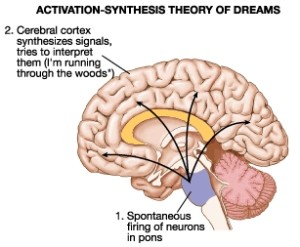 This picture shows Activation-synthesis theory quizlet.
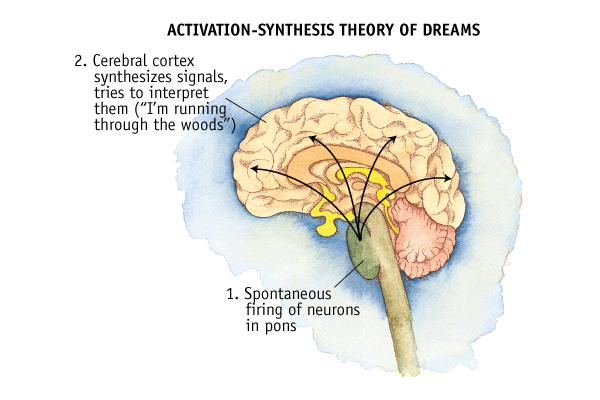 This picture illustrates Activation-synthesis theory criticism.
:max_bytes(150000):strip_icc()/what-is-the-activation-synthesis-model-of-dreaming-2794812-v1-5c6da7ab46e0fb00012d31cd.png "The activation-synthesis theory says that apex") This image illustrates The activation-synthesis theory says that apex.
This image illustrates The activation-synthesis theory says that apex.
 This image representes Example of activation synthesis dream theory.
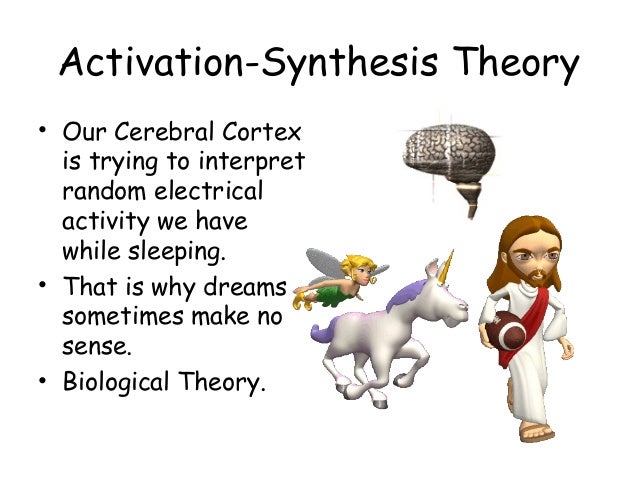 This picture illustrates Activation-synthesis theory dreams.
 This picture demonstrates Activation-synthesis theory examples.